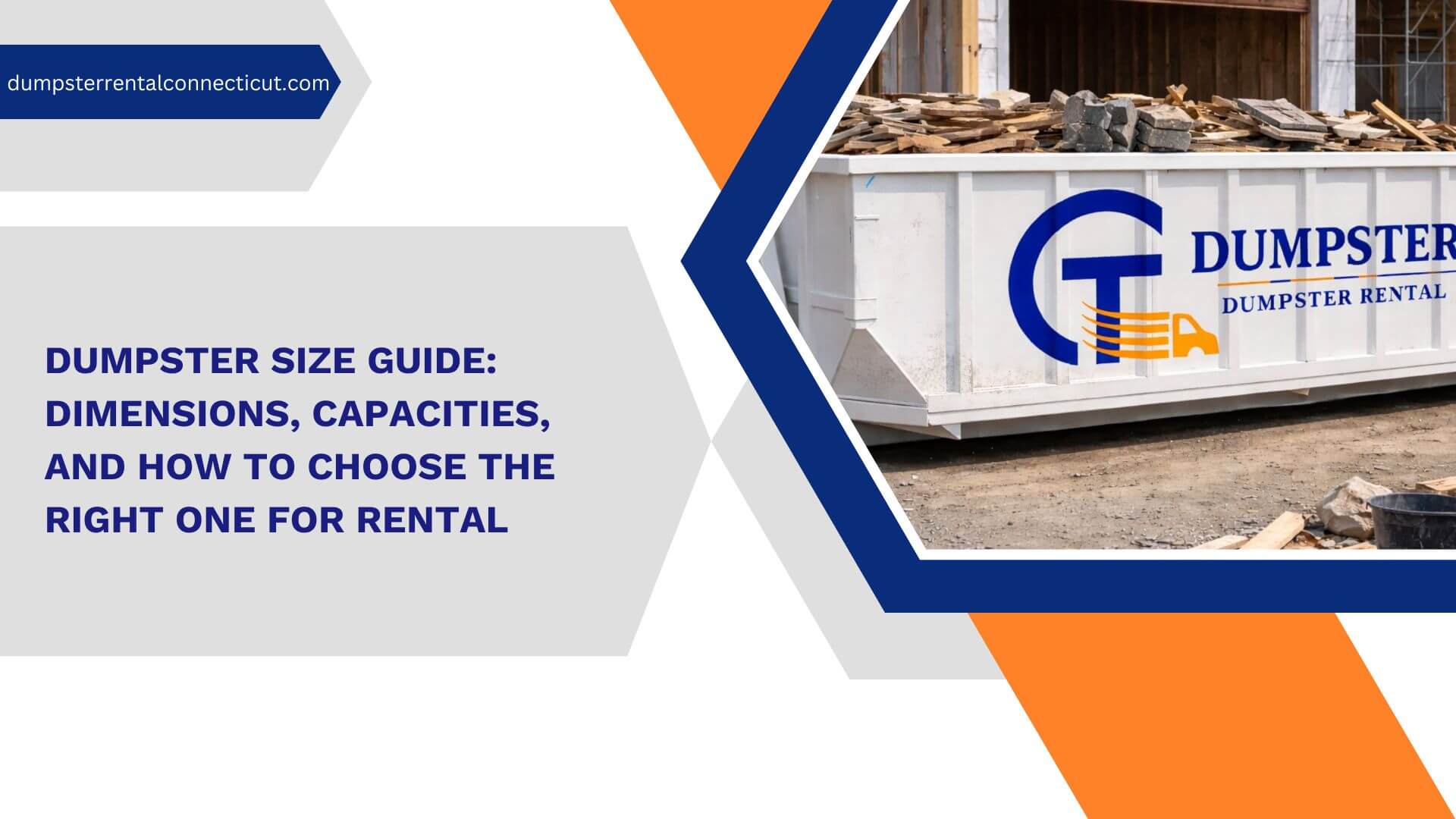
Choosing the right dumpster size helps you avoid overfilling, extra fees, delivery issues, and delays during your project. Whether you are cleaning out a home, remodeling a room, removing roofing shingles, or managing construction debris, the best dumpster rental size depends on your debris volume, material weight, available space, and project type.
This Connecticut dumpster size guide compares common roll-off dumpster sizes, including 10-yard, 15-yard, 20-yard, 30-yard, and 40-yard dumpsters. Use the chart below to compare dimensions, capacity, pickup truck load equivalents, typical weight limits, best uses, and weight considerations before scheduling your rental.
Roll-Off Dumpster Size Chart
Use this dumpster dimensions chart to compare common roll-off dumpster sizes before choosing a rental. Dimensions and weight limits can vary by provider, but this chart gives a practical starting point for Connecticut homeowners, contractors, and businesses.
| Dumpster Size | Typical Dimensions | Capacity | Pickup Truck Loads | Typical Weight Limit | Best Uses | Weight Considerations |
|---|---|---|---|---|---|---|
| 10 Yard Dumpster | Approx. 10–14 ft L x 7–8 ft W x 3–4 ft H | 10 cubic yards | About 3 loads | 2–3 tons | Small cleanouts, bathroom remodels, concrete, dirt, brick | Best for small or heavy debris loads |
| 15 Yard Dumpster | Approx. 14–16 ft L x 7–8 ft W x 4–5 ft H | 15 cubic yards | About 4–5 loads | 2–3 tons | Garage cleanouts, flooring removal, small renovations | Good for mixed household and renovation debris |
| 20 Yard Dumpster | Approx. 20–22 ft L x 7–8 ft W x 4–5 ft H | 20 cubic yards | About 6 loads | 3–4 tons | Roofing, kitchen remodels, and large cleanouts | Watch weight with shingles and demolition debris |
| 30 Yard Dumpster | Approx. 20–22 ft L x 8 ft W x 5–6 ft H | 30 cubic yards | About 9–10 loads | 4–5 tons | Large renovations, construction debris, and commercial cleanouts | Best for bulky debris, not heavy-only loads |
| 40 Yard Dumpster | Approx. 22 ft L x 8 ft W x 8 ft H | 40 cubic yards | About 12+ loads | 5–6 tons | Major construction, demolition, large commercial projects | Best for high-volume light or mixed debris |
Weight limits vary by dumpster rental provider, debris type, disposal facility, and local hauling rules. Heavy materials such as concrete, dirt, brick, asphalt, tile, and roofing shingles may require a smaller container or special approval.
Dumpster Capacity by Pickup Truck Loads and Trash Bags
Dumpster capacity is measured in cubic yards, but pickup truck loads and trash-bag equivalents make it easier to estimate how much debris each container can hold. These estimates are approximate because bulky items, dense materials, and irregular debris can change how much fits in the dumpster.
| Dumpster Size | Pickup Truck Load Equivalent | Approximate Trash Bag Equivalent | Best For |
|---|---|---|---|
| 10 Yard Dumpster | About 3 loads | About 50–60 large trash bags | Small cleanouts, bathroom remodels, heavy debris |
| 15 Yard Dumpster | About 4–5 loads | About 70–90 large trash bags | Garage cleanouts, flooring removal, small renovations |
| 20 Yard Dumpster | About 6 loads | About 110–130 large trash bags | Roofing, remodeling, large home cleanouts |
| 30 Yard Dumpster | About 9–10 loads | About 170–190 large trash bags | Large renovations, construction debris, bulky furniture |
| 40 Yard Dumpster | About 12+ loads | About 230–250 large trash bags | Major construction, demolition, commercial cleanouts |
Trash-bag equivalents are most useful for light household junk and general debris. They are less accurate for furniture, construction debris, concrete, dirt, brick, or roofing shingles.
What Size Dumpster Do I Need?
The right dumpster size depends on how much debris your project will create and how heavy that debris will be. Light materials like household junk, cardboard, furniture, and wood usually fill the dumpster by volume. Heavy materials like concrete, dirt, brick, roofing shingles, and tile can reach weight limits before the dumpster is full.
Best Dumpster Size for Home Cleanouts
For most home cleanouts, a 10 yard, 15 yard, or 20 yard dumpster is usually the best choice. A smaller container works well for attic cleanouts, garage cleanouts, and single-room decluttering. A 20 yard dumpster is better for whole-home cleanouts, estate cleanouts, or projects involving bulky furniture.
Use a 10 yard dumpster for small garage, attic, or basement cleanouts. Use a 15 yard dumpster for moderate household junk removal. Use a 20 yard dumpster for larger cleanouts with furniture, boxes, and mixed debris.
Best Dumpster Size for Renovation Projects
Renovation projects often generate drywall, cabinets, flooring, tile, fixtures, wood, and packaging debris. A 15 yard dumpster works well for small renovations, while a 20 yard dumpster is a better fit for kitchen remodels, bathroom remodels, and multi-room updates.
Use a 15 yard dumpster for small remodeling projects and flooring removal. Use a 20 yard dumpster for kitchens, bathrooms, and medium home renovations. Use a 30 yard dumpster for large remodels or projects with bulky debris.
Best Dumpster Size for Roofing Shingles
Roofing projects usually require a 20 yard or 30 yard dumpster because shingles are dense and heavy. Even if the dumpster has extra space, the load may reach the weight limit quickly. For most residential roof tear-offs, a 20 yard dumpster is a common choice. Larger roofs or multiple layers of shingles may require a 30 yard dumpster.
| Roofing Project | Suggested Dumpster Size | Why |
|---|---|---|
| Small shed, garage, or partial roof tear-off | 10 or 15 Yard Dumpster | Works for smaller shingle loads where debris volume is limited |
| Standard residential asphalt shingle roof | 20 Yard Dumpster | Common choice for many home roofing projects |
| Larger roof or multiple shingle layers | 30 Yard Dumpster | Provides more space while still requiring weight-limit attention |
| Very large residential or commercial roofing project | Confirm with provider | Roof size, shingle layers, and material weight can change the required size |
Roofing shingles are heavy, so dumpster size should be based on both roof area and debris weight. A dumpster may have available space but still reach the weight limit before it is full. If your roof has multiple layers of shingles, wood decking, or other tear-off materials, ask for a weight-based recommendation before scheduling delivery.
Best Dumpster Size for Construction Debris
Construction debris can include wood, drywall, siding, insulation, flooring, fixtures, packaging, and demolition waste. A 30 yard dumpster is often the best choice for larger construction projects, while a 40 yard dumpster is better for major construction, demolition, or commercial debris removal.
Use a 20 yard dumpster for smaller construction projects. Use a 30 yard dumpster for larger remodeling and construction debris. Use a 40 yard dumpster for major construction, demolition, and high-volume debris.
Best Dumpster Size for Concrete, Dirt and Brick
Concrete, dirt, brick, asphalt, and similar dense materials should usually go in a smaller dumpster because they become extremely heavy. A 10 yard dumpster is often the best option for heavy debris because it provides enough capacity while helping control the total load weight.
Use a 10 yard dumpster for concrete, dirt, brick, asphalt, and other dense debris. Avoid large containers for heavy-only loads because bigger dumpsters can become overweight quickly. Ask before loading, since some materials may require special disposal rules.
Dumpster Dimensions by Size
10 Yard Dumpster Dimensions, Capacity and Best Uses
A 10 yard dumpster typically measures about 10 to 14 feet long, 7 to 8 feet wide, and 3 to 4 feet high. It holds 10 cubic yards of debris, or roughly 3 pickup truck loads.
This size is best for small cleanouts, bathroom remodels, concrete, dirt, brick, and other heavy materials where weight matters more than total volume. Its compact footprint also makes it a strong option for Connecticut driveways with limited space.
15 Yard Dumpster Dimensions, Capacity and Best Uses
A 15 yard dumpster usually measures about 14 to 16 feet long, 7 to 8 feet wide, and 4 to 5 feet high. It holds 15 cubic yards of debris, or about 4 to 5 pickup truck loads.
This size works well for garage cleanouts, flooring removal, basement cleanouts, small remodeling projects, and light demolition debris. It gives you more room than a 10 yard dumpster without taking up as much space as a 20 yard dumpster.
20 Yard Dumpster Dimensions, Capacity and Best Uses
A 20 yard dumpster typically measures about 20 to 22 feet long, 7 to 8 feet wide, and 4 to 5 feet high. It holds 20 cubic yards of debris, or about 6 pickup truck loads.
This is one of the most popular dumpster rental sizes for roofing projects, kitchen remodels, estate cleanouts, basement cleanouts, and medium construction debris. It offers a strong balance between capacity and driveway fit.
30 Yard Dumpster Dimensions, Capacity and Best Uses
A 30 yard dumpster usually measures about 20 to 22 feet long, 8 feet wide, and 5 to 6 feet high. It holds 30 cubic yards of debris, or about 9 to 10 pickup truck loads.
This size is ideal for large remodels, construction debris, office cleanouts, bulky furniture, and larger residential or commercial projects. It is best for high-volume debris rather than dense heavy-only loads.
40 Yard Dumpster Dimensions, Capacity and Best Uses
A 40 yard dumpster typically measures about 22 feet long, 8 feet wide, and 8 feet high. It holds 40 cubic yards of debris, or about 12 or more pickup truck loads.
This is the largest common roll-off dumpster size and is best for major construction, demolition, commercial cleanouts, and large-scale debris removal. Because of its height, it is usually better for bulky materials than for very heavy debris.
How to Choose the Right Dumpster Size
Choosing the right dumpster size is easier when you think through four main factors: debris volume, material weight, available space, and overfill risk. A container that is too small may require a second rental, while a dumpster that is too large may cost more than necessary.
Estimate Debris Volume
Start by estimating how much material your project will create. Pickup truck loads are a simple way to visualize volume. A 10 yard dumpster holds about 3 pickup truck loads, while a 20 yard dumpster holds about 6. For large cleanouts or construction projects, a 30 or 40 yard dumpster may be more efficient.
Consider Material Weight
Weight matters as much as volume. Household junk and furniture may take up space without becoming too heavy, while concrete, dirt, brick, roofing shingles, and tile can reach weight limits quickly. For heavy debris, a smaller dumpster is often safer and more cost-effective.
Measure Driveway Space and Delivery Access
Before scheduling delivery, measure the space where the dumpster will be placed. Make sure the area is clear of parked cars, low branches, wires, fences, and other obstructions. The delivery truck also needs enough room to safely drop off and pick up the container.
Leave Room to Avoid Overfilling
Do not load debris above the top edge of the dumpster. Overfilled containers can be unsafe to haul and may result in delayed pickup or extra fees. Choosing a slightly larger size can be a smart decision if your debris estimate is close to the limit.
Dumpster Weight Limits and Heavy Debris Rules
Every dumpster rental includes a weight limit. The limit depends on the container size, debris type, hauling equipment, disposal facility, and local rules. Staying within the weight limit helps avoid extra charges and keeps transportation safe.
Light Debris vs Heavy Debris
Light debris includes household junk, cardboard, furniture, wood, packaging, and general clutter. These materials usually fill the dumpster by volume before they exceed the weight limit.
Heavy debris includes concrete, dirt, brick, asphalt, tile, plaster, roofing shingles, and some demolition materials. These materials can reach the weight limit even when the dumpster is only partially full.
Why Shingles, Concrete, Dirt and Brick Reach Weight Limits Fast
Dense materials pack more weight into less space. A large dumpster filled with concrete or dirt can quickly become too heavy to haul safely. For this reason, heavy-only loads are often limited to smaller containers, such as 10 yard dumpsters.
If your project includes roofing shingles, concrete, dirt, brick, or similar materials, ask about weight limits before loading. Separating heavy debris from lighter materials can also help avoid overweight issues.
Dumpster Placement, Driveway Fit and Connecticut Permit Considerations
Before scheduling a dumpster rental in Connecticut, decide where the container will be placed. Most residential dumpsters are placed in a driveway, but some projects may require street placement if driveway space is limited.
Driveway Placement vs Street Placement
Driveway placement is usually the easiest option because it keeps the dumpster on private property and close to the work area. Make sure the driveway has enough space for the dumpster and the delivery truck. The area should be clear of low branches, wires, vehicles, and other obstructions.
Street placement may require approval from your town or city. Permit rules can vary by Connecticut municipality, especially when a dumpster is placed on a public road, sidewalk, or right-of-way.
Local Permit and Restricted Material Considerations
Connecticut renters should ask about local placement rules and restricted materials before loading the dumpster. Items such as hazardous waste, paint, chemicals, tires, batteries, appliances with refrigerants, and certain electronics may require special handling or separate disposal.
If you are unsure whether an item can go in the dumpster, confirm before loading it. This can help prevent rejected loads, added fees, or delays during pickup.
Dumpster Rental Costs by Size in Connecticut
Dumpster rental costs in Connecticut can vary based on container size, rental length, debris type, weight, delivery location, disposal fees, and permit requirements. Smaller dumpsters usually cost less than larger containers, but the cheapest size is not always the best value if it requires a second rental.
| Dumpster Size | Typical Project Type | Cost Considerations |
|---|---|---|
| 10 Yard Dumpster | Small cleanouts, heavy debris, concrete, dirt, brick | Lower volume, but weight limits matter |
| 15 Yard Dumpster | Garage cleanouts, small renovations, flooring removal | Good middle option for smaller residential jobs |
| 20 Yard Dumpster | Roofing, kitchen remodels, large cleanouts | Popular size with strong value for mixed debris |
| 30 Yard Dumpster | Large renovations, construction debris, commercial cleanouts | Higher capacity; best for bulky materials |
| 40 Yard Dumpster | Major construction, demolition, high-volume debris | Largest size; requires more placement space |
To choose the most cost-effective size, estimate your debris volume carefully and consider the material weight. Renting a slightly larger dumpster can sometimes cost less than ordering a second container later.
Common Mistakes to Avoid When Choosing a Dumpster Size
Choosing the wrong dumpster size can lead to higher costs, project delays, and loading problems. Avoid these common mistakes before booking your rental.
The first mistake is choosing a dumpster that is too small. Underestimating debris volume can require a second rental or extra pickup. The second mistake is ignoring weight limits, especially with shingles, concrete, dirt, and brick.
Another common mistake is overfilling the dumpster. Debris should not extend above the top edge of the container. Renters should also avoid forgetting about placement space, since the driveway or job site must have enough room for delivery and pickup.
Finally, avoid mixing restricted materials or choosing only by price. Hazardous or prohibited items may require separate disposal, and the cheapest dumpster may not be the right size for your project.
Get Help Choosing the Right Dumpster Size in Connecticut
Not sure whether you need a 10 yard, 15 yard, 20 yard, 30 yard, or 40 yard dumpster? The right choice depends on your project type, debris volume, material weight, driveway space, and local placement rules.
For help choosing a roll-off dumpster rental in Connecticut, share a few details about your project, including what you are throwing away, where the dumpster will be placed, and how much debris you expect. A quick size recommendation can help you avoid overfilling, overweight fees, and the cost of ordering a second container.
The best dumpster size gives you enough room for your debris, stays within the weight limit, fits safely on your property, and supports an efficient pickup. For Connecticut homeowners, contractors, and businesses, comparing dimensions, capacity, weight limits, and project type is the easiest way to choose the right roll-off dumpster rental.